
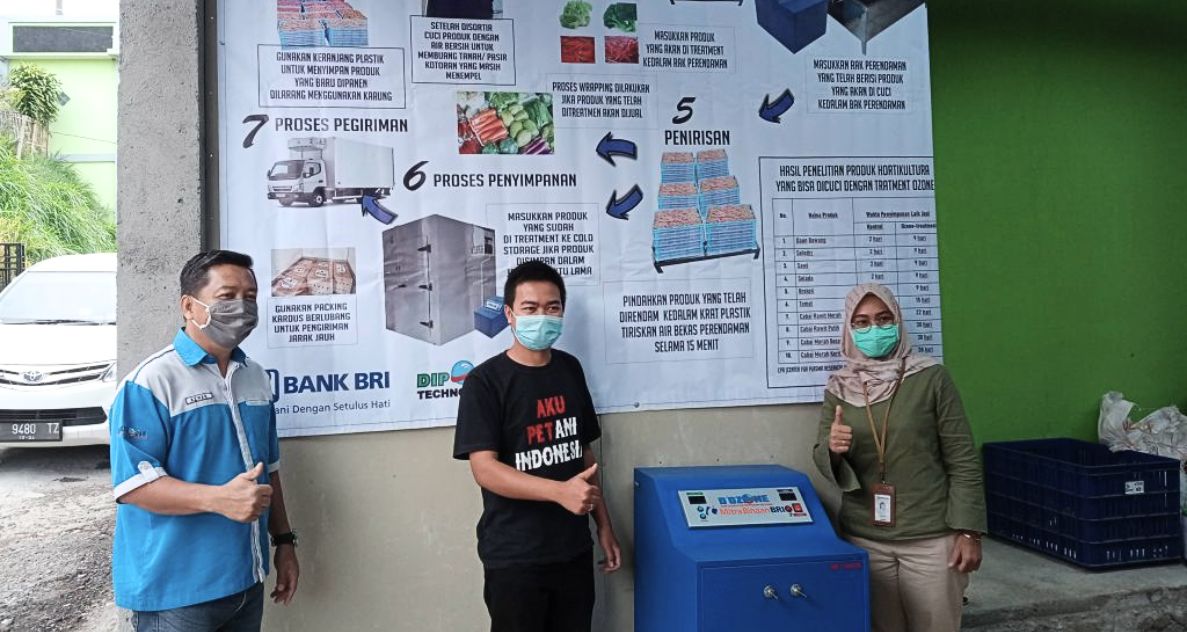
Amidst the dynamics of the rural economy, innovation is a key driver of change. Villages are no longer simply traditional production centers, but can become innovation laboratories connecting farmers, scientists, and the younger generation in a sustainable ecosystem. One successful example is the Mutiara Organik Cooperative in Ngablak Village, Magelang. Since the introduction of ozone technology, its revenue has surged from IDR 1.7 billion per year in 2017 to IDR 6-8 billion per year in 2023, and it has even penetrated the export market to Singapore.
In Batu Bara Regency, ozone plasma technology has also been implemented in the chili farming sector, providing added value for farmers and cooperatives. This technology is not just a tool, but a model capable of increasing farmers' exchange rates and boosting the village economy. With the right collaboration, innovation villages are no longer a dream, but a growing reality.
Villages in Indonesia have great potential to become innovation centers that drive the nation's economy. However, the main challenge faced so far is limited access to technology and markets. Farmers and village communities often rely on inefficient conventional methods, resulting in suboptimal yields and low selling prices. To address this, synergy between science, technology, and village communities is needed to create an innovation ecosystem that can improve shared prosperity.
One concrete example of innovation-driven village transformation can be seen in the Mutiara Organik Cooperative in Ngablak Village, Magelang. Before 2017, farmer groups in this village relied on traditional organic farming methods without the support of modern technology. However, when ozone technology was introduced, the impact was significant. Within a few years, the cooperative's annual turnover jumped from IDR 1.7 billion in 2017 to IDR 6-8 billion per year by 2023. Furthermore, they have successfully penetrated the export market to Singapore, proving that even village-based horticultural products can compete in the global market if supported by the right innovation.
This success demonstrates that innovation is not the sole domain of laboratories or large companies in major cities. Technology can and must reach rural areas, as this is where the majority of Indonesia's agricultural sector thrives. One innovation that has proven successful is the application of ozone plasma technology in horticultural farming. This technology removes pesticides from horticultural produce by washing the harvest with water enriched with ozone in the form of nano-micro bubbles. In addition to making produce healthier and safer for consumption, this technology also increases its shelf life, resulting in longer shelf life and higher sales value.
The application of ozone plasma technology is not only occurring in Magelang, but also in Batu Bara Regency, North Sumatra. In 2020, this technology began being implemented in the chili farming center in Lubuk Cuik Village, Lima Puluh District. With equipment such as ozone generators, dissolving tanks, and ozone-infused cooling chambers, farmers in the area have significantly benefited in maintaining the quality of their produce. Furthermore, cooperatives like Berkah Abadi Jaya in Batu Bara have begun adopting this innovation-based business model, creating new economic opportunities for the surrounding community.
The positive impact of this innovation has not only increased farmers' incomes but also boosted the competitiveness of horticultural products at the national and international levels. One concrete example is the Aspakusa agribusiness in Boyolali, which now includes the label "Using Healthy Ozone Plasma Technology" on its horticultural products. This branding enhances consumer trust and gives their products a competitive advantage in the market.
This initiative demonstrates that villages are not just places for technology consumption, but also the birthplace of innovation that can drive the economy. With support from the government, academia, and the private sector, villages in Indonesia have the potential to become centers of innovation that focus not only on production but also on building sustainable business models that provide long-term benefits for their communities. If this innovative village movement continues to develop, it is possible that Indonesia will become an economically independent nation, with villages as its driving force (PTF).